By Mayreliz Howley
In a classroom at HSEI, a discussion about globalization quickly became personal. What began as a lesson on trade routes and industrial revolutions shifted into a conversation about language, identity, and belonging.
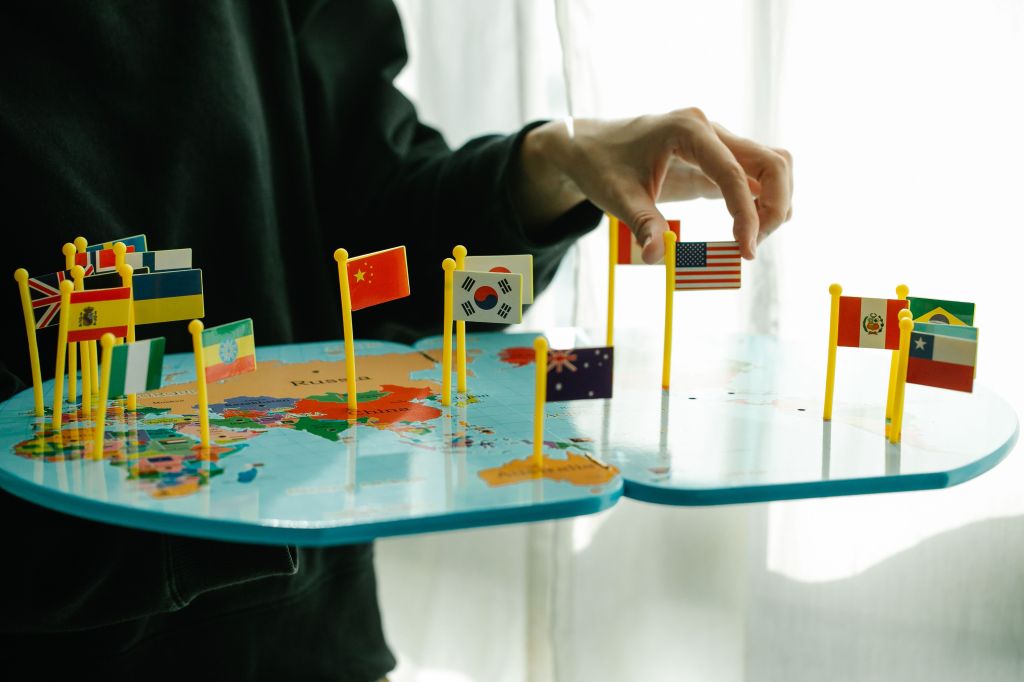
Globalization is often defined by trade routes, factories, and economic systems. But inside a classroom at HSEI, it sounded more like a conversation about language, identity, and opportunity.
Over time, globalization has evolved from early trade routes and colonial encounters into a modern system shaped by industrialization, mass immigration, and now the digital age.
History teacher Dan Flanagan explained that although trade networks existed earlier, the large-scale exchange of goods, people, and ideas between continents marked a significant turning point. Subsequently, events like the Industrial Revolution accelerated this process by making production and transportation faster and cheaper. As a result, countries were increasingly forced to look beyond their borders for markets and labor.
Flanagan connected globalization directly to immigration patterns. “Why do people immigrate anywhere? For opportunities, opportunities for jobs, opportunities for education,” he said.
As industries and wealth became concentrated in certain countries, people from less industrialized nations migrated in search of better wages and stability. Meanwhile, this movement also created inequality, since wealthier nations benefited from cheaper labor and the arrival of skilled immigrants.
What began as an exchange of goods between continents gradually expanded into the movement of people, cultures, and identities across borders. Today, however, globalization looks different. While many communities are becoming more open to accepting and celebrating diverse cultures, others continue to resist these changes.
For students at HSEI, this shift is not just an internet concept; instead, it shapes classrooms, neighborhoods, and personal identity. For example, Melba Campbell, who moved from Puerto Rico to the United States on a full scholarship and later raised children born in the U.S., described globalization as something deeply personal and generational.
“We try to identify ourselves as Americans, but with a combination of whoever we are from our own roots,” she said.According to Campbell, globalization creates a blended identity for immigrant families. In particular, children grow up balancing two cultures by embracing American life while also carrying the traditions, language, and values from their families’ countries of origin. At the same time, she added that this balance depends on how strongly families work to preserve their culture at home.
Moreover, she pointed to language as one of the clearest examples of globalization in daily life. “The language gets combined… a new lingo is created into the new generations,” she explained. In communities like Inwood, this blending often appears as Spanglish or other hybrid forms of communication. Therefore, Campbell emphasized that globalization does not necessarily erase culture; instead, it reshapes it, creating new expressions of identity that reflect both heritage and American influence.
Furthermore, Flanagan described the digital age as a new phase of globalization. With smartphones and artificial intelligence expanding access to information, he suggested that power may no longer rely solely on factories and physical labor, but increasingly on knowledge and innovation. For instance, he explained that today “you can create your own business on your phone,” thereby lowering barriers that once limited economic mobility in developing nations.
As technology continues to connect the world, students at HSEI are not just learning about globalization, they are living it, shaping identities that reflect both where they come from and where they are going.





Leave a Reply