By Stacy Collado and Osmairi Gabin Gil
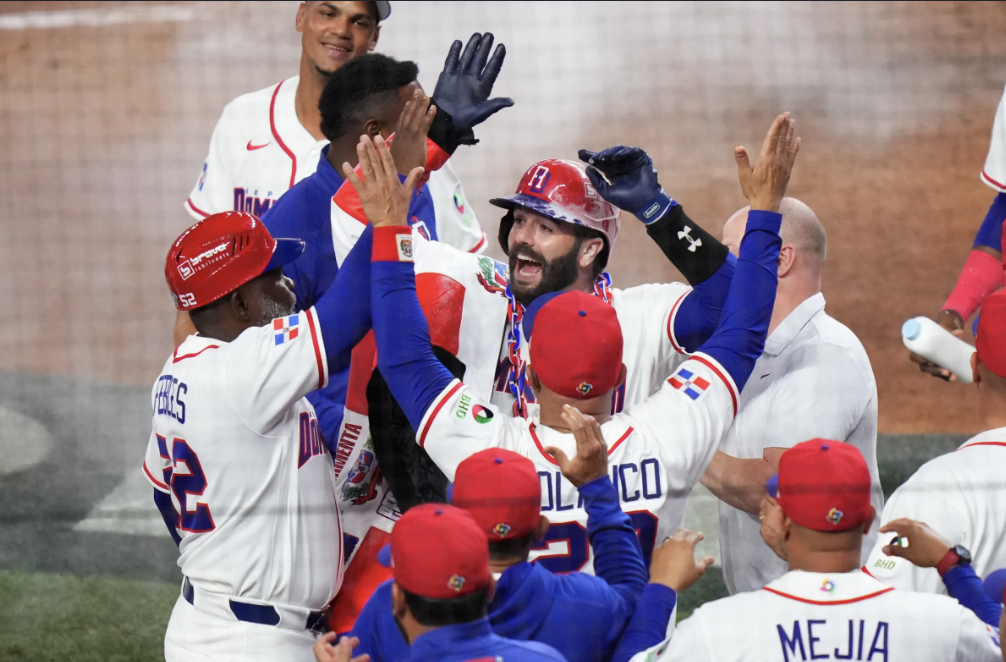
When the World Baseball Classic starts, everything changes in Washington Heights. It is more than just a game; the whole neighborhood feels like a big stadium. You can hear drums and güiras, smell good mangú, and see Dominican flags everywhere on the buildings. For a few weeks, people forget about their hard work and stress. The game brings everyone together and shows the pride of the Dominican people.
For the Dominican community at the High School for Excellence and Innovation (HSEI) and across the five boroughs, the WBC is more than a tournament; it is a vital bridge to cultural heritage. While the scoreboard tracks runs and hits, the real impact lies in the “Platano Power” movement, which fosters a sense of collective identity and family. “Platano Power” is a fun and proud way for Dominican people to celebrate their culture. It connects their favorite sport, baseball, to their favorite food: the plantain (a fruit that looks like a banana but is cooked). Understanding this connection explains why the Dominican national team’s performance carries such weight for our students and staff.
To understand the gravity of these games, we spoke with Jose Alvarez, a staff member at HSEI and a dedicated fan who has witnessed the neighborhood’s transformation firsthand. When asked about the shift in atmosphere during a major tournament, Alvarez struggled to find words big enough for the feeling. “It’s a complete switch of mindset and atmosphere,” he said. “It feels like… to be honest, there’s no word to express it. But the best thing is that we all come together as a collective. What a community should be. Family.”
In a city as massive and often isolating as New York, the WBC creates a shared “mindset” that erases the distance between neighbors. He suggests that the game acts as a social glue, turning a collection of individuals into a unified “front.”
To understand how the World Baseball Classic connects to culture, we spoke with Alfonso Severino, a student who follows baseball and supports the Dominican Republic team. When we asked him how the team shows the country’s strong baseball culture, he said it’s more than just winning games. “It’s not just a sport for us,” he said. “You can see how much it means in how the players act and how fans react. It shows where we come from.”
Alfonso’s answer shows that baseball is a big part of Dominican identity and pride. For him, the Dominican Republic in the tournament is not just about competing—it’s about representing the whole country. He also talked about representation, saying that when students see players like Juan Soto or Julio Rodríguez doing well on a big stage, it gives them someone to look up to. This shows that the World Baseball Classic is not only about baseball, but also about inspiring young people to work hard and follow their goals.
According to data from MLB and World Baseball Classic Inc., the Dominican Republic produces more MLB players than almost any other country. In the 2023 tournament, the team had many All-Star players, making them a “superteam” of the Caribbean. But the tournament also shows how unpredictable baseball is, because one small mistake can end everything for a team.
To get another student perspective, we spoke with Yenizon Reyes, who watches the tournament closely. When I asked him about the Dominican Republic’s performance, he said baseball is not always fair. “Even if you have the best players, you can still lose,” he said. “One mistake can change the whole game.” His response shows that the World Baseball Classic is not just about talent, but about how teams perform in important moments. It explains why even a strong team like the Dominican Republic can lose so quickly.
The most recent tournament ended in heartbreak for the DR, punctuated by a controversial strike zone in the final moments. However, Alvarez maintains a philosophical view of the loss. “What makes the game special is the human element. You know? Because if it was perfect, then it wouldn’t have the impact that it has… that pitch did not define the ball game. They had many opportunities to score… they just didn’t execute,” he reflected.
Alvarez’s perspective is a masterclass in sportsmanship. By focusing on the “human element” rather than blaming an umpire, he acknowledges that imperfection is what makes the victory—and the loss—meaningful. He emphasizes that while a single pitch is what people remember, the true responsibility lies in the “opportunities” the team had throughout the game.
or more updates on local sports and community events, See coaches Frank Cruz or Danicely Hernandez.



Leave a Reply