
by Mayreliz Howley and Carmen Rodriguez
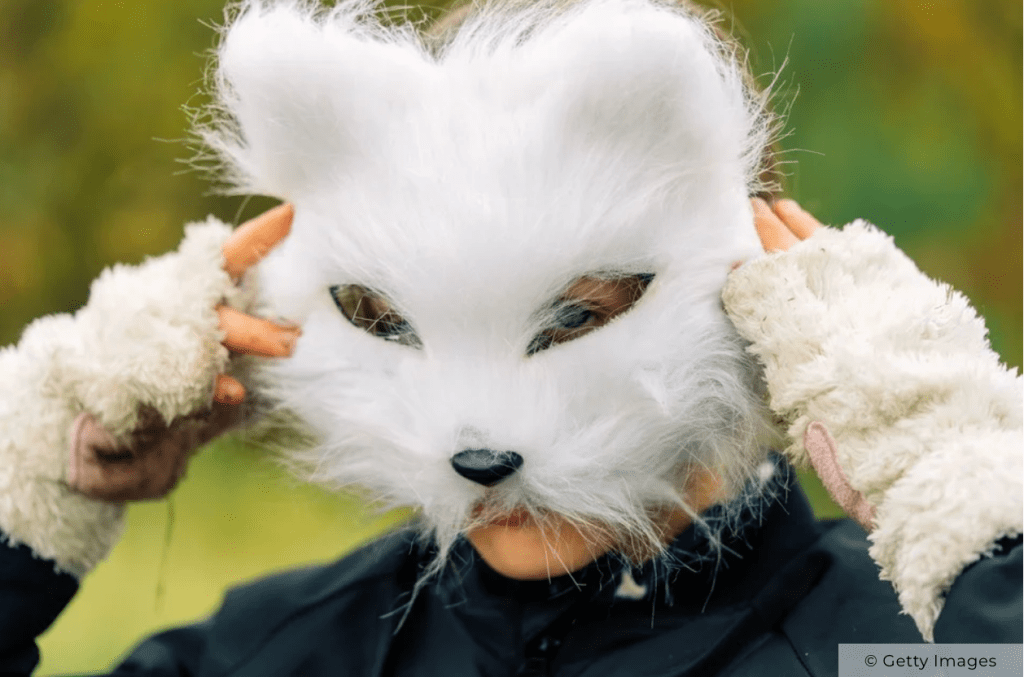
Carmen Rodriguez recalls a moment that first sparked her curiosity about their identity while commuting with her mother on the 1 train to BJ’s Wholesale Club. As they stood on the platform, she noticed a teenage girl stepping off a train on the opposite side, wearing an animal mask that contrasted sharply with her otherwise ordinary clothing. The sight was unusual but not disruptive. The encounter led her to reflect on how expressions of identity that once existed primarily online are increasingly appearing in public spaces, prompting questions about self-expression, social perception, and the visibility of emerging subcultures such as therians.
Even though Therians have been a thing since the early 1990s, Therianism has gained mainstream popularity in the 2020s in platforms like Tik Tok and Youtube sparking interest in the general public and those part of the LGBTQ+ communities. But who are therians and what made them so popular?
In an interview conducted over social media with a 15 year old self-identified Therian who describes themselves as a dog called a “Belgian Malinois Mix” they explained how their identity developed over time. “It’s called ‘the awakening’ which is when someone becomes aware of it. It can happen at any point” in life they said. They also shared, “I’ve always felt a connection with canines, and over time it went from a connection to identifying myself as a canine.” Their response suggests that, for some Therians, this identity is not seen as a trend but as something personal and long-term, even if it only becomes visible to others later in life.
For years, Therianism remained a niche online community, mostly limited to forums and small groups where people shared their experiences privately. It wasn’t widely known or discussed in mainstream spaces. However, the topic has gone viral across Latin American social media, specially on platforms like TikTok, where videos of “packs”, meetups, and “quadrobics” have gained millions of views. In some countries, these gatherings have even started to resemble conventions.
While some therians may also happen to identify as Queer, their therian identity is completely unrelated. Because of the words “identify as,” some people group therians in with trans and other gender-nonconforming groups. However, therians don’t consider themselves a part of the LGBT community and vice versa.
Misunderstandings about furries and therians are often used to spread false ideas about transgender people. Some argue that if someone can identify themselves as a different gender, they could also claim to be anything, like an animal for example. Gender identity and therianism are different. Being transgender is about gender, while being a furry or therian is about personal identity or community. Mixing these ideas harm transgender people because it makes their identities seem less real and turns serious discussions into jokes or extreme examples. This distracts from issues like discrimination and acceptance. Keeping these topics separate helps people understand and respect the LGBTQ+ community.
A noticeable first public meeting of therians in Latin America was on February 22, 2024 in Hermosillo, Mexico where even though almost no therians showed up, more than 1,000 attendees were expected in a way for them to be able to connect with others of their kind. When the video came out into social media like Facebook and Tik Tok the community started to gain attention and became the spotlight.
Some people say this sudden boom is due to social media algorithms pushing unusual content while others believe it reflects a growing openness among younger audiences to explore identity and self expression. Either way, the rapid exposure has brought both attention and controversy to a community that was once largely hidden.
Often we have seen the opinions of users on the platforms or people from different communities. We have noticed the lack of professional opinion on the topic.
Nancy Peralta, a psychologist, says Therians may identify this way because of “A reflection of the neglect and lack of oversight on the part of parents in the upbringing and education of their children.” explaining how depending on the parenting given to their children will affect their choices in the future. Nancy also said that members of this community may act in ways that, “Emotionally, can lead to isolation, stress, and anxiety—and, in extreme cases, even depression.” expressing her concern about how this kind of behavior might affect how they are perceived by their peers and those in their environment.
As therianism continues to gain attention in Latin America, its sudden rise leaves many wondering whether this is just a viral moment or the beginning of a more widely recognized identity despite the controversy and negative attention.







Leave a Reply